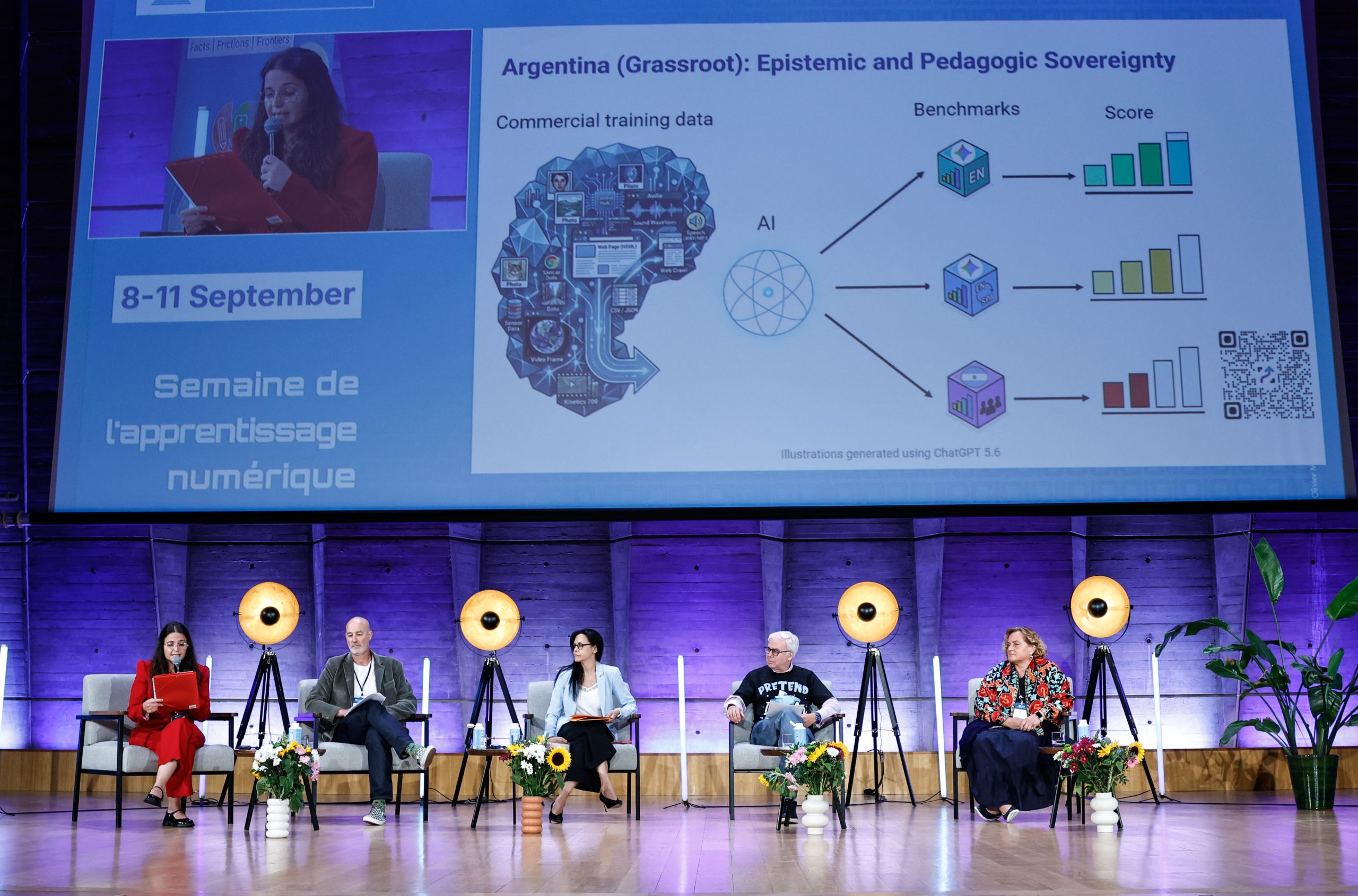

Luciana Benotti and Marcos Javier Gómez attended UNESCO’s Digital Learning Week at UNESCO headquarters in Paris, France. The event took place from September 8 to 11.
Under the theme “Education in the era of AI: Facts | Frictions | Frontiers”, Digital Learning Week 2026 brought together more than 1,500 participants in Paris and thousands more online, including Ministers of Education, high-level specialists, technology sector representatives, teachers, and students.
Sustaining Education as a common good in the age of AI: Towards deliberative governance
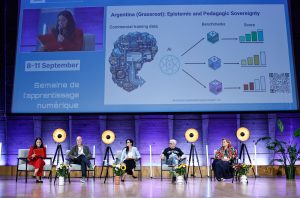
On Tuesday, September 8, Luciana Benotti participated in the opening Ministerial Roundtable alongside more than 25 ministers of education and specialists to share visions on the adoption and impact of AI in the educational system. She also presented the paper “Digital and Artificial Intelligence Sovereignty: four evidence-informed cases” during the plenary session titled “Sustaining education as a common good in the era of AI: towards deliberative governance.” During the session, she presented the paper as part of the official launch of UNESCO’s compilation of policy guidance documents on AI and education using the Pecha Kucha format.
The paper was written by Luciana Benotti, Beatriz Busaniche, Marcos Javier Gómez, and Margarita Trovato, members of Fundación Vía Libre, and is available to read at this link. The full presentation can be viewed on Fundación Vía Libre’s YouTube channel.
Opening the AI black box: regional bias, corporate control, and sovereign infrastructure
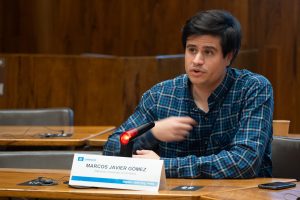
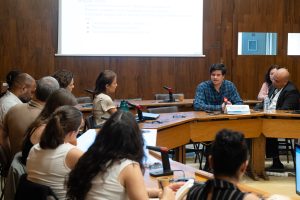
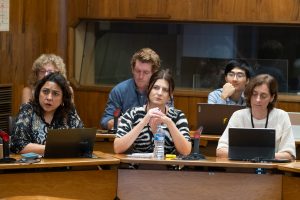
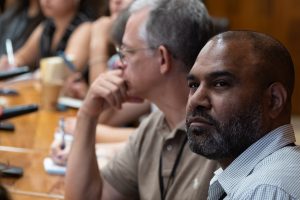
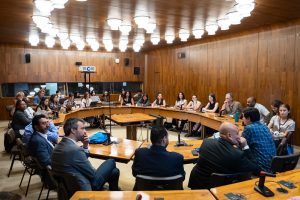
As part of the UNESCO event, several training sessions were conducted. Marcos Javier Gómez led the workshop “Opening the AI black box: regional bias, corporate control, and sovereign infrastructure” for a group of 40 participants from various backgrounds. Participants used EDIA to explore and audit language models by analyzing regional phrases and modifying parameters such as temperature and system prompts. They learned to identify regional biases and hallucinations, explored how system prompts and model parameters affect AI outputs, and developed critical pedagogical approaches to AI, digital sovereignty, and technology adoption.

UNESCO Global Consultation on Education and Artificial Intelligence
UNESCO announced that its global consultation on the need to sustain education as a public good in the era of AI is now open. Fundación Vía Libre invites everyone to participate in this consultation to help evaluate the best conditions for integrating AI into educational systems globally. Contributions can be submitted until October 15, 2026. More information is available on the UNESCO website.